Legal Requirements for Commercial Cleans in Pimlico
Posted on 04/07/2026
Legal Requirements for Commercial Cleans in Pimlico: A Practical Guide for Businesses
If you are booking or managing commercial cleans in Pimlico, the legal side matters just as much as the finish on the floors. A spotless office is great, but if the cleaning setup ignores health and safety duties, waste handling, insurance, or tenancy obligations, the job can become messy in a very different way. This guide breaks down the legal requirements for commercial cleans in Pimlico in plain English, so you can plan properly, ask the right questions, and avoid the sort of problems that only show up when someone complains, something gets damaged, or an inspection lands on a Monday morning.
Whether you run a small office near Victoria, manage a shared building, or need a one-off deep clean after refurbishment, the basics stay the same: clear responsibilities, safe working practices, proper documentation, and a provider that understands what "compliant" really means. If you also want broader context on the area, you might enjoy our local reading on what makes Pimlico feel distinct and a resident's view of living in Pimlico.

Why Legal Requirements for Commercial Cleans in Pimlico Matters
Commercial cleaning is not just another purchase order. It touches people, property, schedules, waste, privacy, and sometimes sensitive spaces like reception areas, kitchens, medical-adjacent rooms, or landlord-managed buildings. In Pimlico, where many premises are tightly run and shared between occupiers, those details matter even more.
The legal requirements are there to reduce risk. That sounds dry, but in practice it means fewer accidents, fewer disputes with landlords or managing agents, and fewer awkward conversations if a cleaner slips, damages a laptop cable, or leaves chemicals where they should not be. To be fair, most issues are avoidable with decent planning.
For businesses and property managers, the law also shapes what you need from a cleaning supplier. You are not just buying labour. You are relying on someone to work safely, protect confidential spaces, follow site rules, manage chemicals sensibly, and handle waste lawfully. If you are arranging a deeper reset after construction dust or a tenant handover, services like deep cleaning in Pimlico and end of tenancy cleaning in Pimlico can raise extra compliance questions because there may be more debris, more access restrictions, and a higher chance of damage if the work is rushed.
There is also reputational value. A business that looks organised on cleanliness usually looks organised in other ways too. Visitors notice the small things. That slightly chemical smell at 8:30 a.m., the wet floor sign that actually appears, the neat waste removal. It all says something.
How Legal Requirements for Commercial Cleans in Pimlico Works
In the UK, commercial cleaning compliance is usually shaped by a mix of general legal duties, site-specific rules, and industry best practice. There is rarely one single "cleaning law" that covers everything. Instead, the obligations sit across health and safety, employment practices, waste disposal, data protection, premises management, and contract terms.
For most Pimlico businesses, the process works like this: the client identifies the work needed, the cleaning provider assesses the site, the provider explains how the work will be carried out safely, and both sides agree who is responsible for access, equipment, keys, alarms, waste, and incident reporting. That may sound like admin. It is admin, yes. But it is the kind that prevents headaches later.
A compliant commercial clean should normally address:
- site risk assessment and method planning;
- safe use, storage, and labelling of cleaning products;
- appropriate training and supervision for operatives;
- insurance cover, especially for public liability and accidental damage;
- safe access arrangements and security controls;
- clear waste disposal procedures;
- checks for slip hazards, electrical hazards, and trip hazards;
- confidentiality and privacy where offices or records are involved;
- documentation for incidents, complaints, and follow-up actions.
If the premises are an office, shop, or shared building, the legal picture may be shaped by the landlord, facilities manager, or building rules too. That is why a service such as office cleaning in Pimlico often needs tighter coordination than a straightforward domestic clean. Different building, different rules, same need for common sense.
Key Benefits and Practical Advantages
Getting the legal side right brings very practical advantages. Not glamorous ones, perhaps, but the kind that keep a business running smoothly.
- Lower risk of accidents. A proper safety approach reduces slips, chemical irritation, and rushed mistakes.
- Better protection for property. Clear instructions and insurance help if furniture, equipment, or finishes are damaged.
- Less downtime. Planned cleaning causes fewer interruptions to staff, visitors, and tenants.
- Stronger trust. Clients and building managers notice when a contractor is organised and responsive.
- Cleaner handover records. Useful for landlords, agents, and businesses with regular audits.
There is also a quiet benefit that people sometimes miss: a legally tidy cleaning process is usually a calmer process. You know who is doing what, what products are being used, where waste goes, and what happens if something goes wrong. That calmness matters, especially in busy parts of London where everything seems to happen at once.
For example, if you are preparing a property for letting, aligning cleaning with an end of tenancy clean can help you avoid last-minute disputes about condition, stains, or missed waste removal. If you want broader service support, the services overview is a sensible place to start.
Who This Is For and When It Makes Sense
This guide is useful if you are any of the following:
- a business owner needing regular office cleaning;
- a landlord or managing agent handling commercial or mixed-use premises;
- a facilities coordinator overseeing cleaners, contractors, or after-hours access;
- a tenant responsible for keeping a workspace or unit compliant;
- a contractor arranging one-off or specialist cleaning around refurbishments or clearance jobs.
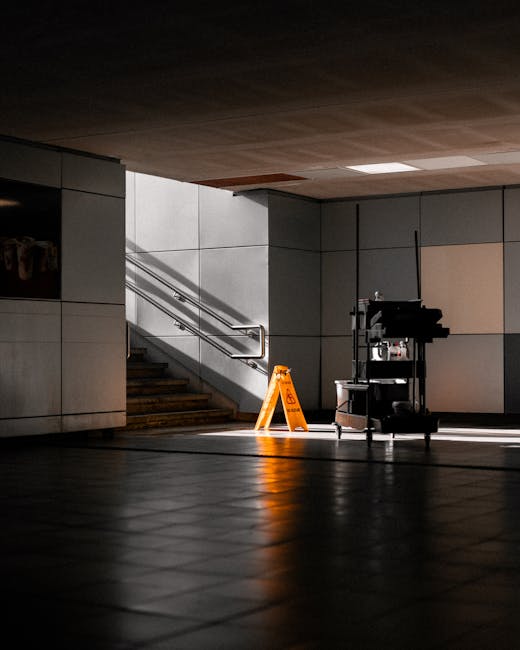
It also matters if your premises involve shared entrances, concierge desks, fragile finishes, valuable equipment, or a lot of public footfall. In those settings, small mistakes become bigger issues fast. A mopped floor without proper signage in a narrow corridor, for instance, is the sort of detail that can look minor right up until someone slips.
For local operators, it makes sense to compare the legal expectations before choosing a service. A one-off clean can be straightforward, but the moment you add after-hours access, chemical storage, or waste handling, the risk profile changes. If you are just testing the waters, one-off cleaning in Pimlico can be a good starting point before moving to a regular contract.
Step-by-Step Guidance
Here is a practical way to think through commercial cleaning compliance without making it complicated.
- Define the site and the scope. List the rooms, surfaces, access times, and any restrictions. Kitchens, comms cupboards, archives, and washrooms all raise different concerns.
- Identify the risks. Think about slips, sharps, electrical equipment, fragile items, lone working, and contact with waste or bodily fluids. Not every site has all of these, of course, but check properly.
- Confirm who is responsible for what. Is the cleaner supplying products? Who unlocks the building? Who reports defects? Who handles alarms?
- Check insurance and training. Ask for evidence of suitable cover and make sure staff are trained for the task. If a provider gets vague here, that is a signal.
- Set site rules in writing. Include access procedures, security instructions, break times, restricted areas, and emergency contacts.
- Plan waste removal. Decide what waste is ordinary, what is confidential, and what needs special handling. Bulky items, sharps, and contaminated waste may require separate arrangements.
- Monitor the first clean. The first visit is often where the real test happens. Walk through the site afterwards and note anything unsafe or incomplete.
- Keep records. File risk assessments, checklists, incident notes, and complaint responses. These matter more than people expect.
If your site includes items that need removal rather than cleaning, check how disposal is handled. For local context, our articles on bulky mattress disposal and upholstery cleaning and Westminster Council rules for mattress disposal in Pimlico are useful background reading.
Expert Tips for Better Results
Over time, a few habits make commercial cleans much easier to manage.
Keep instructions short and site-specific. Long, generic checklists tend to get ignored. A cleaner is far more likely to follow "Do not enter server cupboard" than a three-page policy nobody has read properly.
Match the product to the surface. Not every cleaner should be used on every finish. Stone, vinyl, upholstery, and wood all behave differently. If a provider cannot explain their product choices in plain language, that is a problem.
Build in time for drying and ventilation. Particularly in older Pimlico buildings, air movement can be a bit patchy. You do not want a freshly cleaned corridor that stays damp because nobody allowed enough drying time.
Use a consistent handover routine. One quick walk-through at the end of the job catches a lot: open windows left ajar, bins not emptied, lights left on, or items moved from their original place.
Be careful with "special" requests. Cigarette odours, pet-related stains, flood residue, and post-event mess can all need extra care. Those jobs are not impossible, but they do need a proper method. For related local examples, see removing cigarette odours from Pimlico flat carpets and pet stain solutions for Pimlico terraced houses.
And yes, it is worth being a bit fussy here. Fussy in a good way.
Common Mistakes to Avoid
A lot of problems with commercial cleaning are not dramatic. They are small oversights repeated until they become expensive. The usual suspects are familiar:
- Not checking insurance. "They said they're covered" is not enough.
- Skipping a site assessment. Every building has its own awkward corners.
- Assuming waste can go in ordinary bins. Sometimes it can, sometimes it really should not.
- Leaving access open-ended. Keys, codes, alarm settings, and visitor rules need control.
- Failing to brief staff or occupiers. People walk through wet floors if they do not know a clean is happening.
- Using the wrong cleaner for the job. That can damage surfaces or leave residues behind.
- Not documenting incidents. If something breaks, leaks, or causes a complaint, write it down straight away.
There is also a softer mistake: treating all cleaning as identical. It is not. A standard weekly office clean is very different from a post-build deep clean, and both are very different from a specialist carpet or upholstery treatment. The legal and practical controls should match the task, not just the invoice line.
Tools, Resources and Recommendations
You do not need an armful of paperwork for every job, but a few working documents make life easier.
| Tool or document | Why it helps | When to use it |
|---|---|---|
| Site risk assessment | Identifies hazards before work starts | Before the first clean and after any major change |
| Method statement | Explains how the work will be done safely | For specialist, large, or higher-risk cleaning |
| Cleaning checklist | Creates consistency and a clear finish standard | For recurring office or building cleans |
| Incident log | Records damage, hazards, complaints, or near misses | Whenever something unexpected happens |
| Access instructions | Protects the building and keeps the job running smoothly | Any time cleaners enter outside staffed hours |
As a rule, the best resource is a provider that is willing to explain its process clearly. If you are still comparing options, pricing and quotes should be transparent enough to help you understand what is included, and insurance and safety is worth reading before you commit.
If you need the broader trust pages, a few are especially useful: health and safety policy, terms and conditions, and privacy policy. They help show how the business handles risk, disputes, and data. Not exciting, but very relevant.
Law, Compliance, Standards, or Best Practice
For commercial cleaning in Pimlico, the legal picture is usually guided by general UK duties rather than one single cleaning-specific statute. In practical terms, that means your provider should work in a way that reflects current health and safety expectations, safe chemical handling, proper waste management, and fair employment practices where staff are involved.
A few plain-English principles are worth keeping in mind:
- Health and safety duties apply to the people carrying out the work and the people affected by it.
- Risk assessments should be suitable for the site and the task, not copied from a generic template and left at that.
- Cleaning products should be used, stored, and diluted properly. Labels matter. Ventilation matters too.
- Waste must be handled responsibly, especially where there are bulky items, confidential waste, or anything contaminated.
- Insurance is a practical safeguard, not a box-ticking exercise.
- Data protection may matter if staff enter offices, records rooms, or spaces containing personal information.
- Accessibility and fire safety should be respected when equipment, hoses, cords, or signs are used in shared areas.
Industry best practice usually means more than "we cleaned it well." It means the process was suitable, safe, and documented. It means the provider understood the building, worked neatly, and left no hidden problem behind. That is especially important in busy commercial spaces where a small oversight can affect several businesses, not just one.
If your project is larger or tied to a specific building cycle, you may also find it helpful to review about us and contact us so you can judge how the business handles communication before, during, and after the clean.
Options, Methods, or Comparison Table
Different commercial cleaning setups carry different levels of legal and practical complexity. Here is a simple comparison.
| Cleaning approach | Typical use | Compliance considerations | Best for |
|---|---|---|---|
| Routine office cleaning | Daily or weekly maintenance | Access, keys, confidentiality, safe products, slip control | Offices, studios, small commercial units |
| Deep cleaning | Periodic reset or high-traffic refresh | More chemicals, more equipment, more drying time, more risk planning | Shared premises, post-event cleanups, seasonal refreshes |
| Specialist textile cleaning | Carpets, rugs, upholstery | Surface testing, moisture control, stain treatment, damage prevention | Reception areas, lounges, waiting rooms |
| End of tenancy or handover clean | Move-out or lease transition | Condition evidence, waste disposal, completion timing, landlord expectations | Letting and managed properties |
| One-off reactive clean | After spill, flood, event, or complaint | Fast risk assessment, emergency access, records of what happened | Unexpected incidents and urgent turnaround jobs |
There is no "best" option in the abstract. The right choice depends on the premises, the time available, and how much risk sits underneath the job. A carpet clean near a lobby is one thing; a whole-floor refresh before a client visit is another. That difference changes the paperwork, the method, and the level of care needed.
Case Study or Real-World Example
Picture a small professional office in Pimlico with shared access, a reception area, two meeting rooms, and a kitchenette. The manager wants an evening clean twice a week because the team works late and the building is busy during the day. Simple enough, on the surface.
Before the first clean, the building contact walks through the site with the cleaner. They flag a loose cable near a desk, a storage cupboard that must stay locked, and a polished floor section that becomes slippery if it is over-wet. The cleaning plan is then adjusted so the team uses a lighter application on the floor, keeps the entrance sign in place, and avoids the cupboard entirely. Nothing dramatic. Just sensible.
Then, a few weeks later, a coffee spill happens during a client meeting. The cleaner is already set up with the correct product for the upholstery and the right note on the method sheet. The stain is treated quickly, the area is dried properly, and the incident is logged. No fuss. No argument. The client hardly notices it happened. That is what good compliance looks like in real life: not bureaucracy for its own sake, but a smooth response when the unexpected turns up.
If the same site had not documented access, waste, or cleaning limits, the result could easily have been a broken lock, a wet floor complaint, or an unhappy building manager. Nobody wants that on a Thursday evening.
Practical Checklist
Use this quick checklist before any commercial clean in Pimlico:
- Have you confirmed the full scope of work?
- Has the site been assessed for slip, trip, electrical, and access risks?
- Do you know who holds keys, codes, and alarm instructions?
- Is insurance in place and suitable for the job?
- Are the cleaning products appropriate for the surfaces involved?
- Have waste and disposal responsibilities been agreed?
- Is there a process for reporting damage, hazards, or complaints?
- Have staff, occupiers, or building management been informed of the schedule?
- Are confidentiality and privacy requirements clear?
- Has the finish standard been agreed in writing?
Quick expert summary: the safest way to manage commercial cleaning compliance is to treat it like a planned operational task, not a casual booking. If the provider can explain the risk, the method, and the handover clearly, you are usually on the right track.
Conclusion
Legal requirements for commercial cleans in Pimlico are really about control, clarity, and care. You want a clean result, yes, but you also want safe access, sensible product use, proper waste handling, and a paper trail that makes sense if anyone asks questions later.
The businesses and building managers who handle this well tend to have fewer disputes, fewer safety problems, and fewer awkward surprises. That is the real win. And honestly, in a busy London area where schedules are tight and spaces are often shared, that peace of mind is worth a lot.
If you are planning a commercial clean and want help thinking through the safest, most practical approach, take a look at the relevant service information, or start a conversation early so nothing gets left to chance.
Get a free quote today and see how much you can save.
Sometimes the most professional thing you can do is slow down for five minutes, get the basics right, and then let the work run smoothly from there. Small win. Big difference.